
Author: Mr. Nathapol Nithichodchaisiri
Head of the Center for Foreign Languages
Faculty of Education, Siam Technology College
English is universally recognized as the global lingua franca, serving as a fundamental tool for international communication, academic discourse, and career advancement. However, teaching it effectively remains a complex challenge. In Thailand, for instance, formal English instruction begins as early as the first grade. Yet, despite years of compulsory study, students consistently face hurdles in achieving fluency. According to the 2025 Education First English Proficiency Index (EF EPI), Thailand ranked 116th out of 123 countries, placing it in the bottom 6% globally. While structural factors like class size and resource allocation undoubtedly play a role, the ultimate catalyst that consistently emerges for language acquisition is psychological motivation. As applied linguists have long noted, Motivation (in this sense) is the engine that drives learners toward their goals, uniquely shaped by individual attitudes, emotions, and environments (Crookes & Schmidt, 1991; Gardner, 2007).
To truly understand what drives language learners, educators and researchers frequently turn to a powerful psychological framework developed by Zoltán Dörnyei in 2005: the L2 Motivational Self System (L2MSS). Building upon cognitive psychology theories of “Possible Selves” (Markus & Nurius, 1986), Dörnyei’s model suggests that learners are motivated by the desire to bridge the gap between their current reality and the future they envision for themselves. The L2MSS breaks language motivation down into three core dimensions:
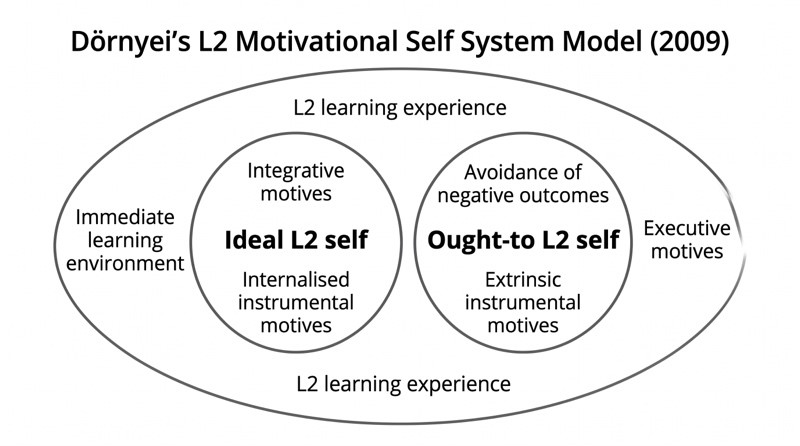
Figure 1 Dörnyei’s L2 Motivational Self System Model (2009)
- The Ideal L2 Self (Who they want to be): This is the learner’s internal aspiration. If a student dreams of working abroad or confidently conversing with international peers, this idealized future self becomes a powerful, internal motivator to master the language.
- The Ought-to L2 Self (Who they are expected to be): This dimension is driven by external pressures. It encompasses the expectations of parents, societal norms, or the pressure to pass an exam. Learners here are motivated by a sense of obligation or the desire to avoid negative consequences.
- The L2 Learning Experience (The reality of the classroom): Motivation isn’t just about the future; it’s about the present. This aspect focuses on immediate, situated experiences, such as how engaging the teacher is, the quality of the curriculum, peer dynamics, and the joy (or frustration) of the learning process itself (Papi, 2010).
In Thai universities, English education is a core component aimed at bringing students to a competitive proficiency level. However, creating a universally motivating environment is complicated by significant socio-economic and structural disparities. There is a stark contrast between urban and rural backgrounds of students, as well as between the public and private university sectors. Private institutions often possess the financial resources to maintain smaller class sizes, employ highly qualified instructors, and offer immersive, multimedia-rich environments. Public universities, conversely, often adhere to rigid standardized curricula and face challenges like oversized lecture halls (Bahanshal, 2013), which limits individualized attention.
Understanding these disparities is crucial. How does the motivation of a student in a well-funded private university differ from that of a student in a resource-constrained public university? Identifying these nuances is the first step toward building a more equitable educational landscape.
Research utilizing the L2MSS framework has provided fascinating insights across the globe. For example, a study of junior high students in China revealed that the immediate L2 Learning Experience was the most dominant motivational factor, outshining future aspirations (Xiaoyu & Dengpan, 2022). Conversely, high school students in Ecuador were primarily driven by their Ideal L2 Self, reflecting a strong internal visualization of success (Molina et al., 2022). Similarly, extensive research comparing public and private schools in Iran found uniformly high levels of the Ideal L2 Self across both sectors, with no significant differences (Azarnoosh, 2014). Within Thailand, recent studies also reflect high motivational levels among students. Research by Swatevacharkul (2021) involving public high school students highlighted strong levels of both the Ideal L2 Self and positive Learning Experiences. Furthermore, at the university level, Yang and Liang-Itsara (2024) found that for students studying languages other than English, the immediate classroom experience played the most critical role.
While the L2MSS is a widely respected tool, there is still a significant knowledge gap regarding the specific motivational dynamics of Thai university students across different socio-economic backgrounds. To foster better English education, future research should focus on several key areas. First, there is a clear need for large-scale comparative studies to directly compare public and private universities in Thailand, as understanding these differences can inform targeted, context-specific teaching strategies. Second, researchers should embrace mixed-methodologies by moving beyond simple questionnaires and incorporating in-depth interviews. Qualitative data can capture the complex family dynamics, cultural pressures, and personal anxieties that shape a student’s Ought-to L2 Self. Finally, longitudinal tracking is essential to observe how a student’s motivation changes as they transition from freshmen to seniors. Tracking these shifts over time can help educators intervene before students lose their drive.
Motivation is not a one-size-fits-all concept; it is the highly personal engine of language acquisition. By utilizing the L2 Motivational Self System, educators can shift their focus from generic teaching methods to deeply understanding their students’ “possible selves” and optimizing their immediate classroom experiences. As Thailand strives to elevate its English proficiency on the global stage, deepening our understanding of what truly motivates our students is not just beneficial, but essential.
References
Azarnoosh, M. (2014). Public schools and private language institutes: Any differences in students’ L2 motivational self system? Journal of Language and Translation, 4(1), 77–90.
Bahanshal, D. A. (2013). The effect of large classes on English teaching and learning in Saudi secondary schools. English Language Teaching, 6(11).
Crookes, G., & Schmidt, R. W. (1991). Motivation: Reopening the research agenda. Language Learning, 41(4), 469–512.
Dörnyei, Z. (2005). The psychology of the language learner: Individual differences in second language acquisition. Lawrence Erlbaum.
Education First. (2025). EF English Proficiency Index: A ranking of 123 countries and regions by English skill.
Gardner, R. C. (2007). Motivation and second language acquisition. PORTA LINGUARUM, 8, 9-20.
Markus, H., & Nurius, P. (1986). Possible selves. American Psychologist, 41(9), 954–969.
Molina, C., et al. (2022). Exploring the L2 motivational self system in Ecuador: A questionnaire study in secondary school/high school contexts. RLA. Revista de lingüística teórica y aplicada, 60(2), 39–62.
Swatevacharkul, R. (2021). L2 motivational self system: A case of Thai EFL senior high school students. 3L: The Southeast Asian Journal of English Language Studies, 27(4), 129–143.
Xiaoyu, T., & Dengpan, H. (2022). Research on the differences of junior high school students’ English learning motivation from the perspective of L2MSS theory. International Journal of Language and Linguistics, 10(2), 118-124.
Yang, L., & Liang-Itsara, A. (2024). Thai undergraduates’ motivation in learning different foreign languages: A Dörnyei’s L2MSS perspective. International Journal of Learning, Teaching and Educational Research, 23(1), 159–185.


